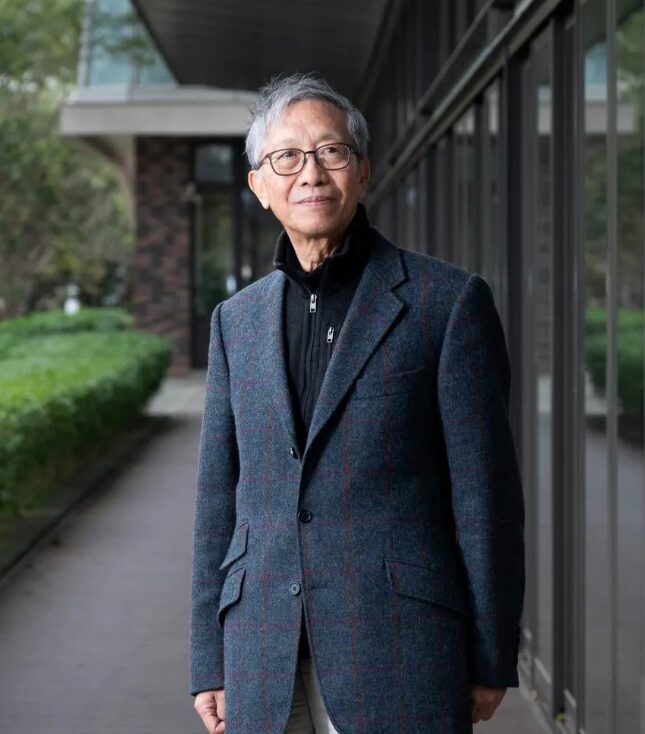
Chenggang Xu

Senior Research Scholar, SCCEI, Stanford University

Chenggang Xu

Political economist on China's communist regime, specializing in institutional economics, economic reform, and the political economy of transition.

China's EconomyContract TheoryDevelopment EconomicsEconomic ReformLaw and EconomicsLaw and FinancePolitical EconomicsTransition EconomicsDigital Economy & AI

Chenggang Xu is a political economist on China's communist regime. He is a Senior Research Scholar at SCCEI, Stanford University and a Board Member of the Ronald Coase Institute. Before retiring from the University of Hong Kong, he was the Chung Hon-Dak Professor of Economics there, a Special-Term Professor at Tsinghua University, and a World-Class University Professor at Seoul National University.

He served as the president of Asian Law and Economics and also as a consultant for the World Bank and the IMF. He has frequently appeared in the media to analyze or comment on China's political economy. He obtained his PhD from Harvard in 1991. He was a recipient of the 2013 Sun Yefang Prize and the first recipient of the Chinese Economics Prize (2016).

Books

Xu, Chenggang. Institutional Genes: The Origins of China's Institutions and Totalitarianism, 2025. Cambridge University Press (English version).

Xu, Chenggang. Institutional Genes: The Origins of China's Institutions and Totalitarianism, 2024. Taiwan University Press (Chinese version).

Xu Chenggang's Collected Works, Volume 1, 2021. CITIC Press Corporation.

Xu Chenggang's Collected Works, Volumes 2–5, forthcoming.

Degrees: Ph.D. (Economics), Harvard University, 1991  ·  MSc (Engineering), Tsinghua University, Beijing, 1982

Full-time

Senior Research Scholar
Stanford Center on China's Economy and Institutions
2022–present
Professor of Economics
Cheung Kong Graduate School of Business (CKGSB)
2016–2020
Chung Hon-Dak Professor & Professor of Economics
University of Hong Kong
2008–2016
Reader, Senior Lecturer & Lecturer
London School of Economics
1991–2008
Research Associate
Institute of Quantitative and Technical Economics, CASS
1982–1984

Visiting & Part-time

Visiting Professor, Finance
Imperial College London
2021–2023
Visiting Fellow
Hoover Institution, Stanford University
2021–2022
Polonsky Visiting Professor
Hebrew University of Jerusalem
2016–2017
Special-term Professor
Tsinghua University
2002–2017
World-Class University Professor
Seoul National University
2009–2013
Visiting Scholar
Department of Economics, Harvard University
2002
  1. Di Guo and Chenggang Xu, "Why China Can't Win the AI-Led Industrial Revolution." Project Syndicate, Dec 2025.
  2. Albert Bo Zhao, Sheng Li, and Chenggang Xu. "Does Securities Regulation Matter? Mandatory Disclosure, Excess Stock Volatility and the U.S. 1934 Securities Exchange Act." Forthcoming, Journal of Law and Economics.
  3. Guo, Di, Kun Jiang, Chenggang Xu and Xiyi Yang (2023). "Geographic clusters, regional productivity and resource reallocation across firms: Evidence from China." Research Policy, 52(2).
  4. Guo, Di, Kun Jiang, Chenggang Xu and Xiyi Yang (2022). "Industrial Clustering, Income and Inequality in Rural China." World Development, 154.
  5. Guo Di & Chenggang Xu, "Is Today's China Yesterday's Soviet Union?" Project Syndicate, Dec 2022.
  6. Chenggang Xu, "The Origin of China's Communist Institutions." In The Cambridge Economic History of China, ed. Debin Ma and Richard von Glahn. Forthcoming.
  7. Guo Di, Haizhou Huang, Kun Jiang, Chenggang Xu (2020). "Disruptive innovation and R&D ownership structures." Public Choice, 2020.
  8. Guo Di, Kun Jiang, Chenggang Xu and Xiyi Yang (2020). "Growth, Inequality and Industrial Clusters in China." Journal of Economic Geography, 2020.
  9. Chenggang Xu (2019). "The Pitfalls of a Centralized Bureaucracy." Acta Oeconomica, 69(1), pp. 1–16.
  10. Gan, Jie, Yan Guo, and Chenggang Xu (2017). "China's Decentralized Privatization and Change of Control Rights." Review of Financial Studies, 2017.
  11. Xu, Chenggang (2017). "Capitalism and Socialism: Review of Kornai's Dynamism, Rivalry, and the Surplus Economy." Journal of Economic Literature, 2017.
  12. Guo, Di, Kun Jiang, and Chenggang Xu (2017). "Institution and Managerial Task Allocation: Evidence from Chinese Entrepreneurs." Journal of Human Capital, 11(3).
  13. Chenggang Xu (2015). "Political and Economic Institutions of China and Their Influences." Cato Journal, 2015.
  14. Kim, Byung-Yeon, Jin Wang, and Chenggang Xu (2014). "Development of private sector determines reform and economic development." China Journal of Economics, 1(3): 57–83.
  15. Guo, Di, Kun Jiang, Byung-Yeon Kim, and Chenggang Xu (2014). "Political Economy of Private Firms in China." Journal of Comparative Economics, 42(2): 286–303.
  16. Chenggang Xu (2012). "Institutional Foundations of China's Structural Problems." In Aoki and Wu (eds.), The Chinese Economy: A New Transition. Palgrave Macmillan.
  17. Chenggang Xu (2011). "The Fundamental Institutions of China's Reforms and Development." Journal of Economic Literature, 49(4): 1076–1151.
  18. Svetlana Andrianova, Panicos Demetriades and Chenggang Xu (2011). "Political Economy Origins of Financial Markets in Europe and Asia." World Development, 39(5).
  19. Chenggang Xu and Xiaobo Zhang (2010). "The Evolution of Chinese Entrepreneurial Firms: Township-Village Enterprises Revisited." In Wu and Yao (eds.), Reform and Development in China. Routledge.
  20. Julan Du and Chenggang Xu (2009). "What Firms Went Public in China? A Study of Financial Market Regulation." World Development, 37(4): 812–824.
  21. Yan Guo, Jie Gan and Chenggang Xu (2008). "A Nationwide Survey of Privatized Firms in China." Seoul Journal of Economics, 21(2).
  22. Julan Du and Chenggang Xu (2008). "Market Socialism or Capitalism? Evidence from Chinese Financial Market Development." In Kornai and Qian (eds.), Market and Socialism. Palgrave Macmillan.
  23. Yingyi Qian, Gérard Roland and Chenggang Xu (2007). "Coordinating Reforms in Transition Economies." In Berglöf et al. (eds.), The Economics of Transition. Palgrave Macmillan.
  24. Yingyi Qian, Gérard Roland and Chenggang Xu (2006). "Coordination and Experimentation in M-Form and U-Form Organizations." Journal of Political Economy, 114(2): 366–402.
  25. Katharina Pistor and Chenggang Xu (2005). "Governing Stock Markets in Transition Economies: Lessons from China." American Law and Economics Review, 7(1): 184–210.
  26. Katharina Pistor and Chenggang Xu (2004). "Incomplete Law." Journal of International Law and Politics, pp. 931–1013.
  27. Haizhou Huang and Chenggang Xu (2003). "Financial Syndication and R&D." Economics Letters, 80(2): 141–146.
  28. Eric Maskin and Chenggang Xu (2001). "Soft Budget Constraint Theories: From Centralization to the Market." Economics of Transition, 2001.
  29. Yingyi Qian, Gérard Roland and Chenggang Xu (2001). "Attribute Coordination in Organizations." Annals of Economics and Finance, 2(2): 487–518.
  30. Eric Maskin, Yingyi Qian and Chenggang Xu (2000). "Incentives, Information, and Organizational Form." Review of Economic Studies, 67(2): 359–378.
  31. Haizhou Huang and Chenggang Xu (1999). "Institutions, Innovations, and Growth." American Economic Review, 89(2): 438–443.
  32. Haizhou Huang and Chenggang Xu (1999). "Financial Institutions and the Financial Crisis in East Asia." European Economic Review, 43(4–6): 903–914.
  33. Yingyi Qian, Gérard Roland and Chenggang Xu (1999). "Why is China Different from Eastern Europe?" European Economic Review, 43(4–6): 1085–1094.
  34. Yingyi Qian and Chenggang Xu (1998). "Innovation and Bureaucracy under Soft and Hard Budget Constraints." Review of Economic Studies, 65(1): 151–164.
  35. Haizhou Huang and Chenggang Xu (1998). "Financial Budget Constraints and the Optimal Choices of R&D Project Financing." Journal of Comparative Economics, 26(1): 62–79.
  36. Juzhong Zhuang and Chenggang Xu (1996). "Profit Sharing and Financial Performance in Chinese State Enterprises." Economics of Planning, 29(3): 205–222.
  37. Charles Goodhart and Chenggang Xu (1996). "The Rise of China as an Economic Power." National Institute Economic Review, No. 155: 56–80.
  38. Martin L. Weitzman and Chenggang Xu (1994). "Chinese Township Village Enterprises as Vaguely Defined Cooperatives." Journal of Comparative Economics, 18(2): 121–145.
  39. Chenggang Xu (1995). A Different Transition Path: Ownership, Performance, and Influence of Chinese Rural Industrial Enterprises. Garland Publishing.
  40. Yingyi Qian and Chenggang Xu (1993). "The M-form Hierarchy and China's Economic Reform." European Economic Review, April 1993: 541–548.
  41. Yingyi Qian and Chenggang Xu (1993). "Why China's Economic Reforms Differ: The M-form Hierarchy and Entry/Expansion of the Non-State Sector." Economics of Transition, 1(2): 135–170.
  42. Yingyi Qian, Gérard Roland and Chenggang Xu (1998). "Coordinating Activities under Alternative Organizational Forms." In Maskin and Simonovits (eds.), Planning, Shortage and Transformation. MIT Press, pp. 57–80.
  43. Chenggang Xu and Juzhong Zhuang (1998). "Why China Grew: the role of decentralisation." In Boon, Gomulka, and Layard (eds.), Emerging from Communism. MIT Press, pp. 183–212.
  44. Yingyi Qian, Gérard Roland and Chenggang Xu (2001). "Coordination in Organizations: A Comparative Analysis." In Dewatripont et al. (eds.), The Strategic Analysis of Universities. Editions de l'Université de Bruxelles, pp. 9–29.
  45. Katharina Pistor and Chenggang Xu (2002). "Fiduciary Duty in Transitional Civil Law Jurisdictions: Lessons from the Incomplete Law Theory." Corporate Law: Corporate Governance Law eJournal.
  46. Katharina Pistor and Chenggang Xu (2003). "Managers' Fiduciary Duty and the Enforcement of Incomplete Corporate Law." In Milhaupt (ed.), Global Markets, Domestic Institutions. Columbia University Press, pp. 77–106.
  47. Katharina Pistor and Chenggang Xu (2004). "Beyond Law Enforcement – Governing Financial Markets in China and Russia." In Kornai and Rose-Ackerman (eds.), Building a Trustworthy State. Palgrave, pp. 167–190.
  48. Katharina Pistor and Chenggang Xu (2004). "The Challenge of Incomplete Law and How Different Legal Systems Respond to It." Project Le Bijuridisme: Une approche économique.
  49. Katharina Pistor and Chenggang Xu (2005). "Governing Emerging Stock Markets: Legal vs. Administrative Governance." Corporate Governance: An International Review.
  50. James Kung, Chenggang Xu and Feizhou Zhou. "From Industrialization to Urbanization: The Social Consequences of Changing Fiscal Incentives on Local Governments' Behavior." In Stiglitz (ed.), Institutional Design for China's Evolving Market Economy.
  51. Yingyi Qian and Chenggang Xu (1993). "Commitment, Financial Constraints, and Innovation: Market Socialism Reconsidered." In Bardhan and Roemer (eds.), Market Socialism: The Current Debate. Oxford University Press, pp. 175–189.
  1. Sheng Li, Chenggang Xu, Bo Zhao (2020). "Does Financial Regulation Matter? Manipulation, Stock Volatility and the U.S. 1933/34 Securities Acts." Working paper.
  2. Guo, Di, Kun Jiang, Chenggang Xu and Xiyi Yang (2019). "Geographic Clustering and Resource Reallocation Across Firms in Chinese Industries." Mimeo, CKGSB.
  3. Xiaohui Cui, Xinyu Fan, Di Guo, Zhao Jin, Rong Xiao, Chenggang Xu (2021). "China AI Index, 2020." Forthcoming.
  4. Mai, Xiaoting and Chenggang Xu (2016). "Land Rights and the Limits on Government: Cross-Country Historical Evidence." Mimeo, University of Hong Kong.
  5. Guo, Di, Kun Jiang, Yutong Wang, and Chenggang Xu (2019). "The Political Economy of Making an Authoritarian Constitution: The Case of China." CKGSB.
  6. Guo, Di, Kun Jiang, Chenggang Xu and Xiyi Yang (2019). "Productivity and Resource Allocation in Industrial Clusters in China." Draft mimeo.
  7. Li, Weijia, Chenggang Xu and Bo Zhao (2019). "Multi-task Incentives in Bureaucracy: Theory and Evidence from China." Draft mimeo.
  8. Kim, Byung-Yeon, Jin Wang and Chenggang Xu (2015). "Understanding Firms in Transition Economies: China and Central-Eastern Europe Compared." Mimeo, University of Hong Kong.
  9. Sheng Li and Chenggang Xu. "Does Financial Regulation Matter? Market Volatility and the US 1933/34 Acts." Mimeo, University of Hong Kong, 2010.
  10. Chenggang Xu and Katharina Pistor. "Enforcement Failure under Incomplete Law: Theory and Evidence from Financial Market Regulation." Mimeo, 2009.
  11. Julan Du and Chenggang Xu. "Regional Competition and Regulatory Decentralization: The Case of China." Mimeo, University of Hong Kong, 2010.
  12. Panicos O. Demetriades, Jun Du, Sourafel Girma and Chenggang Xu. "Does the Chinese Banking System Promote the Growth of Firms?" Mimeo, University of Hong Kong, 2009.
  13. Jian Tong and Chenggang Xu. "Emulation-Based Growth: Technology and Institutions." Mimeo, LSE, 2006.
  14. Jian Tong and Chenggang Xu. "Financial Institutions and The Wealth of Nations: Tales of Development." LSE STICERD TE/2004/469; CEPR DP4348.
  15. Patrick Bolton and Chenggang Xu. "Ownership and Managerial Competition: Employee, Customer, or Outside Ownership." LSE STICERD TE/01/412.
  16. Haizhou Huang and Chenggang Xu. "Financial Institutions, Financial Contagion, and Financial Crises." Harvard CID Working Paper no. 21, 1999. IMF Working Papers 00/92.
  17. Haizhou Huang, Dalia Marin and Chenggang Xu. "Financial Crisis, Economic Recovery and Banking Development in Former Soviet Union Countries." CEPR Working Paper.
  18. Haizhou Huang and Chenggang Xu. "Boundary of the Firm, Commitment and R&D Financing." WDI Working Paper No. 316.
  19. Chongen Bai and Chenggang Xu. "Does Employee Ownership Improve Incentives for Efforts?" LSE STICERD TE/01/413.
  20. Chenggang Xu. "Risk Aversion, Rural-Urban Wage Differentiation and Migration." CEP Discussion Paper 108, 1992.
  • 2016First recipient of the China Economics Prize for contributions in understanding government and enterprise incentive mechanisms for the transition economy of China.
  • 2013Sun Yefang Prize in Economics (the most prestigious economics prize in China) for "The Fundamental Institutions of China's Reforms and Development," Journal of Economic Literature, 49(4), 2011.
  • 2012RGC Theme-based Research Scheme (TRS), "Enhancing Hong Kong's Future as a Leading International Financial Centre," HK$15.365 million, 2012–2017. Co-Principal Investigator.
  • 2011RGC General Research Fund, "Chinese Local Governments, Industrial Clusters, and Regional Disparities," HK$924,805. Principal Investigator.
  • 2011Entry in Who's Who in the World (Marquis Who's Who), 28th Edition onwards.
  • 2010"World Class University" Program Grant, Korea Science and Engineering Foundation, ~USD 1.2 million, 2010–2014. Awarded title of "World Class University Professor" by the Korean Ministry of Education.
  • 2008Elected Professor of the Year, HKUST International EMBA Program, 2007–08.
  • 2005ESRC Grant (with Panicos Demetriades), "National and International Aspects of Financial Development," £200,000, 2005–2008.
  • 1997Phare ACE Programme (European Commission) Grant (with Gérard Roland), 1997–1999.
  • 1995ESRC Grant (with A. Hussain and D. Quah), 1995–97.
  • 1993ESRC Award, 1993–1994.
  • 1989Second National Prize of Sciences (China) (Co-winner) for History of Science and Technology in the Twentieth Century.
  • 1985Harvard-Yenching Doctorate Fellowship.

Get in Touch

Senior Research Scholar, Stanford Center on China's Economy and Institutions, Stanford University.

许成钢

斯坦福大学《斯坦福中国经济与制度研究中心》资深研究员

许成钢

政治经济学家,专注制度经济学、经济改革与转轨经济政治经济学。

中国经济制度经济学发展经济学经济改革法经济学法金融学政治经济学转轨经济学人工智能与制度

许成钢现为斯坦福大学《斯坦福中国经济与制度研究中心》资深研究员,美国《科斯研究所》理事,《欧洲经济政策研究中心》(CEPR)研究员。曾任香港大学《钟瀚德》经济学讲座教授及《国之基金》经济学讲座教授,北京清华大学特聘教授,首尔国立大学《世界级大学》讲座教授,伦敦经济学院副教授。

曾在哈佛大学和中国社科院任职,曾任世界银行和IMF的顾问,曾任《亚洲法律经济学学会》会长。他的研究领域包括制度经济学、政治经济学、法经济学、比较制度、发展经济、转轨经济学、中国政治经济。他于1991年在哈佛大学获得经济学博士学位;2016年获首届中国经济学奖,2013年获孙冶芳经济学奖。

著作

许成钢,Institutional Genes: The Origins of China's Institutions and Totalitarianism, 2025,剑桥大学出版社(英文版)。

许成钢,《制度基因:中国制度与极权主义制度的起源》,2024,台湾大学出版社 哈佛-燕京系列丛书(中文版)。

许成钢文集,第1卷,2021年,中信出版集团。

许成钢文集,第2–5卷,待出版。

主要成就:首届中国经济学奖  ·  第十五届孙冶方经济科学奖

学历:经济学博士,哈佛大学,1991年  ·  工学硕士,清华大学,1982年

1950年生于杭州。1964–1967年就读清华附中。1967–1976年在黑龙江绥滨农场(建设兵团)。1976–1979年待业青年,自学物理、哲学、工程、经济学。1979–1982年就读清华机械工程系研究生。1982–1984年任社科院数量与技术研究所助理研究员。1984年获《哈佛-燕京学社》资助赴哈佛大学访学,后转为哈佛大学经济系博士研究生。

  1. Di Guo and Chenggang Xu, "Why China Can't Win the AI-Led Industrial Revolution." Project Syndicate, Dec 2025.
  2. Albert Bo Zhao, Sheng Li, and Chenggang Xu. "Does Securities Regulation Matter? Mandatory Disclosure, Excess Stock Volatility and the U.S. 1934 Securities Exchange Act." Forthcoming, Journal of Law and Economics.
  3. Guo, Di, Kun Jiang, Chenggang Xu and Xiyi Yang (2023). "Geographic clusters, regional productivity and resource reallocation across firms: Evidence from China." Research Policy, 52(2).
  4. Guo, Di, Kun Jiang, Chenggang Xu and Xiyi Yang (2022). "Industrial Clustering, Income and Inequality in Rural China." World Development, 154.
  5. Guo, Di, and Chenggang Xu. "Is Today's China Yesterday's Soviet Union?" Project Syndicate, December 2022.
  6. Chenggang Xu, "The Origin of China's Communist Institutions," in The Cambridge Economic History of China, ed. Debin Ma and Richard von Glahn. Forthcoming.
  7. Guo Di, Kun Jiang, Chenggang Xu and Xiyi Yang (2020). "Growth, Inequality and Industrial Clusters in China." Journal of Economic Geography, 2020.
  8. Guo Di, Haizhou Huang, Kun Jiang, Chenggang Xu (2020). "Disruptive innovation and R&D ownership structures." Public Choice, 2020.
  9. Chenggang Xu (2019). "The Pitfalls of a Centralized Bureaucracy." Acta Oeconomica, Vol. 69(1), pp. 1–16.
  10. Gan, Jie, Yan Guo, and Chenggang Xu (2017). "China's Decentralized Privatization and Change of Control Rights." Review of Financial Studies, 2017.
  11. Xu, Chenggang (2017). "Capitalism and Socialism: Review of Kornai's Dynamism, Rivalry, and the Surplus Economy." Journal of Economic Literature, 2017.
  12. Guo, Di, Kun Jiang, and Chenggang Xu (2017). "Institution and Managerial Task Allocation: Evidence from Chinese Entrepreneurs." Journal of Human Capital, Vol.11, No.3.
  13. Chenggang Xu (2015). "Political and Economic Institutions of China and Their Influences." Cato Journal, 2015.
  14. Kim, Byung-Yeon, Jin Wang, and Chenggang Xu (2014). "Development of private sector determines reform and economic development." China Journal of Economics (经济学报), Vol.1, No.3: 57–83.
  15. Guo, Di, Kun Jiang, Byung-Yeon Kim, and Chenggang Xu (2014). "Political Economy of Private Firms in China." Journal of Comparative Economics, 42(2): 286–303.
  16. Chenggang Xu (2012). "Institutional Foundations of China's Structural Problems." In Aoki and Wu (eds.), The Chinese Economy: A New Transition. Palgrave Macmillan.
  17. Chenggang Xu (2011). "The Fundamental Institutions of China's Reforms and Development." Journal of Economic Literature, 49(4): 1076–1151.
  18. Svetlana Andrianova, Panicos Demetriades and Chenggang Xu (2011). "Political Economy Origins of Financial Markets in Europe and Asia." World Development, 39(5).
  19. Chenggang Xu and Xiaobo Zhang (2010). "The Evolution of Chinese Entrepreneurial Firms: Township-Village Enterprises Revisited." In Wu and Yao (eds.), Reform and Development in China. Routledge.
  20. James Kung, Chenggang Xu and Feizhou Zhou. "From Industrialization to Urbanization: The Social Consequences of Changing Fiscal Incentives on Local Governments' Behavior." In Stiglitz (ed.), Institutional Design for China's Evolving Market Economy.
  21. Julan Du and Chenggang Xu (2009). "What Firms Went Public in China? A Study of Financial Market Regulation." World Development, 37(4): 812–824.
  22. Yan Guo, Jie Gan and Chenggang Xu (2008). "A Nationwide Survey of Privatized Firms in China." Seoul Journal of Economics, 21(2).
  23. Julan Du and Chenggang Xu (2008). "Market Socialism or Capitalism? Evidence from Chinese Financial Market Development." In Kornai and Qian (eds.), Market and Socialism. Palgrave Macmillan.
  24. Yingyi Qian, Gérard Roland and Chenggang Xu (2007). "Coordinating Reforms in Transition Economies." In Berglöf et al. (eds.), The Economics of Transition. Palgrave Macmillan.
  25. Yingyi Qian, Gérard Roland and Chenggang Xu (2006). "Coordination and Experimentation in M-Form and U-Form Organizations." Journal of Political Economy, 114(2): 366–402.
  26. Katharina Pistor and Chenggang Xu (2005). "Governing Stock Markets in Transition Economies: Lessons from China." American Law and Economics Review, 7(1): 184–210.
  27. Katharina Pistor and Chenggang Xu. "Governing Emerging Stock Markets: Legal vs. Administrative Governance." Corporate Governance: An International Review.
  28. Katharina Pistor and Chenggang Xu (2004). "Incomplete Law." Journal of International Law and Politics, pp. 931–1013.
  29. Katharina Pistor and Chenggang Xu (2004). "Beyond Law Enforcement – Governing Financial Markets in China and Russia." In Kornai and Rose-Ackerman (eds.), Building a Trustworthy State. Palgrave.
  30. Katharina Pistor and Chenggang Xu (2004). "The Challenge of Incomplete Law and How Different Legal Systems Respond to It." Project Le Bijuridisme: Une approche économique.
  31. Haizhou Huang and Chenggang Xu (2003). "Financial Syndication and R&D." Economics Letters, 80(2): 141–146.
  32. Katharina Pistor and Chenggang Xu (2003). "Managers' Fiduciary Duty and the Enforcement of Incomplete Corporate Law." In Milhaupt (ed.), Global Markets, Domestic Institutions. Columbia University Press.
  33. Katharina Pistor and Chenggang Xu (2002). "Fiduciary Duty in Transitional Civil Law Jurisdictions: Lessons from the Incomplete Law Theory." Corporate Law: Corporate Governance Law eJournal.
  34. Eric Maskin and Chenggang Xu (2001). "Soft Budget Constraint Theories: From Centralization to the Market." Economics of Transition, 2001.
  35. Yingyi Qian, Gérard Roland and Chenggang Xu (2001). "Attribute Coordination in Organizations." Annals of Economics and Finance, 2(2): 487–518.
  36. Yingyi Qian, Gérard Roland and Chenggang Xu (2001). "Coordination in Organizations: A Comparative Analysis." In Dewatripont et al. (eds.), The Strategic Analysis of Universities. Editions de l'Université de Bruxelles.
  37. Eric Maskin, Yingyi Qian and Chenggang Xu (2000). "Incentives, Information, and Organizational Form." Review of Economic Studies, 67(2): 359–378.
  38. Haizhou Huang and Chenggang Xu (1999). "Institutions, Innovations, and Growth." American Economic Review, 89(2): 438–443.
  39. Haizhou Huang and Chenggang Xu (1999). "Financial Institutions and the Financial Crisis in East Asia." European Economic Review, 43(4–6): 903–914.
  40. Yingyi Qian, Gérard Roland and Chenggang Xu (1999). "Why is China Different from Eastern Europe?" European Economic Review, 43(4–6): 1085–1094.
  41. Yingyi Qian and Chenggang Xu (1998). "Innovation and Bureaucracy under Soft and Hard Budget Constraints." Review of Economic Studies, 65(1): 151–164.
  42. Haizhou Huang and Chenggang Xu (1998). "Financial Budget Constraints and the Optimal Choices of R&D Project Financing." Journal of Comparative Economics, 26(1): 62–79.
  43. Yingyi Qian, Gérard Roland and Chenggang Xu (1998). "Coordinating Activities under Alternative Organizational Forms." In Maskin and Simonovits (eds.), Planning, Shortage and Transformation. MIT Press.
  44. Chenggang Xu and Juzhong Zhuang (1998). "Why China Grew: the role of decentralisation." In Boon, Gomulka, and Layard (eds.), Emerging from Communism. MIT Press.
  45. Juzhong Zhuang and Chenggang Xu (1996). "Profit Sharing and Financial Performance in Chinese State Enterprises." Economics of Planning, 29(3): 205–222.
  46. Charles Goodhart and Chenggang Xu (1996). "The Rise of China as an Economic Power." National Institute Economic Review, No.155: 56–80.
  47. Martin L. Weitzman and Chenggang Xu (1994). "Chinese Township Village Enterprises as Vaguely Defined Cooperatives." Journal of Comparative Economics, 18(2): 121–145.
  48. Chenggang Xu (1995). A Different Transition Path: Ownership, Performance, and Influence of Chinese Rural Industrial Enterprises. Garland Publishing.
  49. Yingyi Qian and Chenggang Xu (1993). "The M-form Hierarchy and China's Economic Reform." European Economic Review, April 1993: 541–548.
  50. Yingyi Qian and Chenggang Xu (1993). "Why China's Economic Reforms Differ: The M-form Hierarchy and Entry/Expansion of the Non-State Sector." Economics of Transition, 1(2): 135–170.
  51. Yingyi Qian and Chenggang Xu (1993). "Commitment, Financial Constraints, and Innovation: Market Socialism Reconsidered." In Bardhan and Roemer (eds.), Market Socialism: The Current Debate. Oxford University Press.
经济学与科学
  1. "从理论到实际:我所认识的米尔格罗姆",FT中文网,2020年10月23日
  2. "经济学理论的贫困",《经济学》(季刊),2020年10月
  3. "今年诺贝尔经济学奖得主更重要的贡献是方法论",网易研究局,2019年10月16日
  4. "经济学家眼中的人工智能,有什么不一样?",长江EE,2019年6月
  5. "经济学家长访谈|许成钢②:为什么人工智能不能完全替代人",澎湃,2019年1月31日
  6. "诺奖和诺奖之外",FT中文网,2018年10月12日
  7. "不做容易的事:追忆詹姆斯•莫里斯",FT中文网,2018年9月7日
  8. "人工智能、工业革命与制度",《比较》2018年第2期
  9. "科尔奈的学术贡献和影响",《比较》,2017年第6期
  10. "新制度经济学的过去和未来",《比较》,2017年第5期
  11. "资本主义与社会主义:评科尔奈的《动态变化、竞争和剩余经济》",《比较》2016年
  12. "中国经济学问题的制度特点",东方早报,2015年9月12日
  13. "经济学到底是不是科学",2014年港大-浙大会议演讲
  14. "科学研究的目标:市场竞争还是认识世界",《比较》2004年
  15. "经济学、经济学家与经济学教育",《比较》2002年
经济改革
  1. "许成钢:个人信息保护应确立产权观念",财新,2020年10月12日
  2. "减贫政策干预的五点建议:班纳吉和许成钢的对话",比较,2020年第1期
  3. "Challenges in Finance and the Macroeconomy in China",清华经管,2019年12月12日
  4. "许成钢:哈特产权理论与中国企业改革的经验教训",北京当代经济学基金会
  5. "不完备合同理论的重大理论突破",财新,2017年2月16日
  6. "从传统产权到数据产权",FT中文网,2019年7月3日
  7. "专访许成钢:人工智能需要什么样的制度建设?",FT中文网,2019年6月28日
  8. "经济学家访谈|许成钢:为什么产权是一切制度的起源",澎湃新闻,2019年3月14日
  9. "第四次产业革命已经悄然而至",虎嗅网,2019年3月14日
  10. "软预算约束新症状:骄傲的高铁",FT中文网,2019年2月19日
  11. "许成钢:房地产税并不能从根本上解决房价过高的问题",凤凰网,2019年1月18日
  12. "贸易战是绊脚石",天下杂志,2019年1月15日
  13. "China Should Learn From History Before Embracing AI",财新,2018年11月16日
  14. "支持民企需要在制度安排上解决问题",界面,2018年11月23日
  15. "许成钢谈改革开放40年:要为民企创造安全和稳定发展的环境",中国网财经,2018年9月11日
  16. "在科技前沿 政府的直接干预一定会出错",界面,2018年8月6日
  17. "哈特产权理论对于中国企业改革有何启示?",FT中文网,2018年5月28日
  18. "The Pitfalls of a Centralized Bureaucracy",2016年中国经济学奖获奖感言
  19. "许成钢:人工智能与产业革命的另一面",财经,2017年12月11日
  20. "官僚体制中的激励机制问题",《经济学报》,2017年6月
  21. "中国发展和改革面对的制度障碍",《二十一世纪评论》,2017年4月
  22. "新形势下的老问题——债务和软预算约束",《比较》第81辑,2016年1月18日
  23. "中国改革的动力何在?",FT中文网,2014年10月1日
  24. "城镇化与体制改革",《比较》,2013年第3期
  25. "从体制认识中国经济的结构性问题",《比较》2011年第5期
  26. "政治集权下的地方分权与中国改革",《比较(第三十六辑)》,2009年
  27. "解释金融危机的新框架和中国的应对建议",《比较(第三十九辑)》,2009年
  28. "法律、执法与金融监管——介绍'法律的不完备性'理论",《经济社会体制比较》,2008年11月25日
  29. "政治集权下的地方经济分权与中国改革",中信出版社,2008年
  30. "软预算约束理论:从中央计划到市场",《经济社会体制比较》2000年第4期
  31. 钱颖一与许成钢,"中国的经济改革为什么与众不同",原文英文,发表于1993年
  32. 许成钢,"中国经济改革与现代微观经济学理论",《改革》,1993年第5期
中国制度
  1. "五四运动与制度大分流",FT中文网,2019年5月5日
  2. "'中国奇迹'与制度基因",FT中文网,2018年12月19日
  3. "改革不适应创新的制度,才能产生革命性的变化",亿欧网,2018年11月29日
  4. "人工智能、工业革命与制度",《比较》2018年第2期
  5. "科尔奈的学术贡献和影响",《比较》,2017年第6期
  6. "新制度经济学的过去和未来",《比较》,2017年第5期
  7. "从引力波谈科学、哲学和自由的关系",FT中文网,2016年2月17日
  8. "资本主义与社会主义:评科尔奈的《动态变化、竞争和剩余经济》",《比较》2016年
  9. "经济学到底是不是科学",2014年港大-浙大会议演讲
  10. "政府与市场'中国模式'和金融危机",《比较》第68辑(2013年第5期)
  11. "科斯对经济科学的启蒙",FT中文网,2013年9月3日
  12. "科学研究的目标:市场竞争还是认识世界",《比较》2004年
  13. "经济学、经济学家与经济学教育",《比较》2002年
个人与家庭
  1. "毕生的启蒙者:纪念许良英诞辰100周年,兼论人权-产权",FT中文网,2020年5月6日
  2. "一个天才的陨落:怀念马丁•魏茨曼(下)",FT中文网,2019年9月23日
  3. "一个天才的陨落:怀念马丁•魏茨曼(上)",FT中文网,2019年9月18日
  4. "麦克法夸尔:文革起源的探索者",FT中文网,2019年2月14日
  5. "经济学家长访谈|许成钢①:我的自学生涯",澎湃,2019年1月30日
  6. "科斯对经济科学的启蒙",FT中文网,2013年9月3日
  7. "从引力波谈科学、哲学和自由的关系",FT中文网,2016年2月17日
  8. "我的文革十年",爱思想网站,2012年2月23日
  9. "做人-做学问,人生观-世界观:纪念父亲九十大寿",2010年。收于《许良英纪念文集》,2016年。
  10. "探讨、整肃与命运",《七十年代》(北岛编),香港中文大学出版社及三联出版社,2009年,413–440页。
  11. "悠悠岁月,艰苦磨砺成长起来的经济学者——许成钢自述",《生产力研究》2008年14期
媒体及采访
  1. 大声系列访谈(40余集):制度基因:中国制度与极权主义制度起源,YouTube 播放列表
  2. 美国之音专栏:许成钢谈经论政(15集),YouTube 播放列表
  3. 台湾华视三国演义系列访谈,YouTube 播放列表
  4. 不明白系列访谈,YouTube 播放列表
  5. 美国之音:中国经济与70年代的苏联,YouTube
  6. 专访许成钢:极权体制下的经济奇迹与困局,YouTube
  7. 专访许成钢:中国能否跻身发达国家?有何过不去的坎?,YouTube
  8. 专访:许良英的幻想与挣扎:从迷信毛泽东共产党到回归爱因斯坦,YouTube
  9. 【長風講座】當前中國的經濟困境與美中博弈,YouTube
  10. 許成鋼:共產極權主義對全人類的巨大挑戰,YouTube
  11. "美股再次暴跌,背后这个因素很重要",网易研究局,2020年3月1日
  12. "许成钢:应以科学为依据控疫情,全面免除中小企业税费",搜狐智库,2020年2月29日
  13. "许成钢:应对重大突发事件 信息迅速流动是一切的一切",界面新闻,2020年2月1日
  14. "许成钢:哈特产权理论与中国企业改革的经验教训",北京当代经济学基金会
  15. "人工智能与产业革命的另一面",《财经》,2017年12月11日
  16. "不完备合同理论的重大理论突破",财新,2017年2月16日
  17. 许成钢专访(王延春),"以'真改革'释放经济活力",《财经》,2016年12月20日
  18. 金炳椽、王瑾、许成钢,"私有企业的发展是改革和发展的关键",《经济学报》,2014年
  19. "依宪、法治是市场经济发展的基础",《人民论坛网》,2014年10月23日
  20. "许成钢,'Chinas Planwirtschaft stobt an ihre Grenzen'",德国《法兰克福汇报》,2014年8月15日
  21. "许成钢(interview),'The private ownership should be defended in the constitution'",匈牙利《世界经济周刊》,2014年6月26日
  22. "调整央地关系比微刺激更重要",《华夏时报》,2014年5月4日
  23. "许成钢谈新兴国家的动摇",日本《朝日新闻》,2014年3月12日
  24. "土地私有制是城镇化基础",《财新网》,2014年2月18日
  25. "打破'分权式威权制'处理好政府市场关系",《华夏时报》,2014年1月2日
  26. 许成钢、许平,"自由精神的启蒙者",《新世纪》2013年第5期,2013年2月4日
  27. 许成钢、许平,"历史真相的寻踪者",《新世纪》2013年第4期,2013年1月28日
  28. "金改要触动基本体制",《新世纪》2012年第51期,2012年12月31日
  29. "改革分权式威权制:与财新特约记者吴素萍的对话",《新世纪》,2012年第20期,2012年5月21日
  30. "地方竞争的困境",《中国改革》2011年第9期,2011年9月1日
  31. "文化和制度:简评格雷夫和塔贝里尼的《制度和文化分化:中欧的比较》",《比较》2011年第4期
  32. "国家垄断土地所有权带来的基本社会问题(上篇)",《中国改革》2011年第4期,2011年4月1日
  33. "国家垄断土地所有权带来的基本社会问题(下篇)",《中国改革》2011年第5期,2011年5月1日
  34. "诊治中国地产痼疾",《中国改革》2011年第3期,2011年3月1日
  35. "宪政转型不容回避",《新世纪周刊》2011年第8期,2011年2月28日
  36. "打开死结",《中国改革》2011年第1、2期,2010年1月1日
  37. 许成钢专访(杨品文),"土地供应政策亟须改变",《中国经营报》,2011年1月8日
  38. 许成钢专访(马国川),"把完整的土地所有权还给农民",《经济观察报》,2011年1月8日
  39. 许成钢专访(杨哲宇和胡舒立),"苏联解体廿年祭",《中国改革》2010年第12期,2010年12月1日
  40. "误解俄罗斯",《中国改革》2010年第9期,2010年9月1日
  41. "恢复金融责任性的监管",《新财富》,2009年9月
研讨会论文
  1. 许成钢,《决定中国未来的制度:给予科尔奈教授的85岁生日》,亚诺什·科尔奈的85岁生日庆祝大会,布达佩斯考文纽斯大学与中欧大学,2013年1月18日
  2. 许成钢,《城镇化的机遇和陷阱》,2012凤凰财经峰会,北京,2012年12月16日
  3. 许成钢,《中国的政治和经济机构与宪政》,香港经济学会第七届两年一度会议,岭南大学,香港,2012年12月14日
  4. 许成钢,《金融改革依赖体制改革》,2012财新峰会,北京,2012年11月17日
  5. 许成钢,《中国的制度与宪政》,亚洲法经济学会,山东大学,济南,2012年7月11日
  6. 许成钢,《欧债危机的教训》,大师经济论坛,ING经济论坛,台北,2012年6月21日
  7. 郭迪、姜坤、许成钢(2012),《制度和管理任务分配:来自中国企业家的证据》,"想法和人力资本的市场与经济发展"表彰诺贝尔经济学奖得主罗纳德·科斯会议,布法罗大学,2012年5月12日
  8. 许成钢(2012),《中国经济结构问题的制度基础》,2012中金投资论坛(三亚),2012年1月13日
  9. 许成钢,《中国制度基础的结构性问题》,第三届中国经济国际会议,香港金融研究中心,香港,2012年1月12日
  10. 许成钢,《中国是如何治理的》,悉尼中国商业论坛,澳洲悉尼,2011年11月29日
  11. 许成钢,《体制造成的资源配置扭曲和结构性问题》,2011年财新峰会,2011年11月12日
部分演讲
  1. 主题演讲,"大量国企改革不能够成功的学术依据是什么",第四届思想中国论坛,2018年5月12日
  2. 主题演讲,"为什么用大数据、人工智能去建立计划经济是行不通的",第二届野三坡中国经济论坛,2017年9月23日
  3. 特邀录像演讲,"制度、创新与经济增长",凤凰卫视《世纪大讲堂》,2017年6月17日
  4. 主题演讲,"2016年中国经济学奖获奖感言",2016年12月6日
  5. 特邀录像演讲,"决定中国未来的制度:给予科尔奈教授的85岁生日",布达佩斯考文纽斯大学与中欧大学,2013年1月18日
  6. 特邀演讲,"城镇化的机遇和陷阱",2012凤凰财经峰会,北京,2012年12月16日
  7. 主题演讲,"中国的政治和经济机构与宪政",香港经济学会第七届两年一度会议,岭南大学,香港,2012年12月14日
  8. 特邀演讲,"金融改革依赖体制改革",2012财新峰会,北京,2012年11月17日
  9. 主题演讲,"中国的制度与宪政",亚洲法经济学会,山东大学,济南,2012年7月11日
  10. 主题演讲,"欧债危机的教训",大师经济论坛,ING经济论坛,台北,2012年6月21日
  11. 特邀演讲,"制度和管理任务分配:来自中国企业家的证据",表彰诺贝尔经济学奖得主罗纳德·科斯会议,布法罗大学,2012年5月12日
  12. 特邀演讲,"中国经济结构问题的制度基础",2012中金投资论坛(三亚),2012年1月13日
  13. 主题演讲,"中国制度基础的结构性问题",第三届中国经济国际会议,香港金融研究中心,香港,2012年1月12日
  14. 特邀演讲,"中国是如何治理的",悉尼中国商业论坛,澳洲悉尼,2011年11月29日
  15. 特邀演讲,"体制造成的资源配置扭曲和结构性问题",财新峰会,北京,2011年11月11–12日

联系许成钢

斯坦福大学《斯坦福中国经济与制度研究中心》资深研究员。